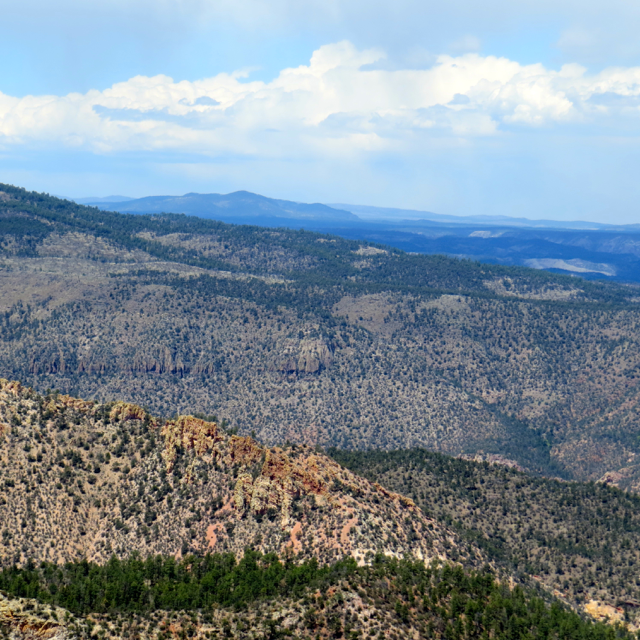
Mountains in the Gila National Forest
My son Jack and I zipped through New Mexico on I-40 about thirteen years ago. We camped a few nights near Albuquerque and I was fascinated by the state and vowed I would visit again. What I failed to realize on our quick trip through is that New Mexico is a very mountainous state and when you are camping, every thousand feet you rise, the temperature falls.
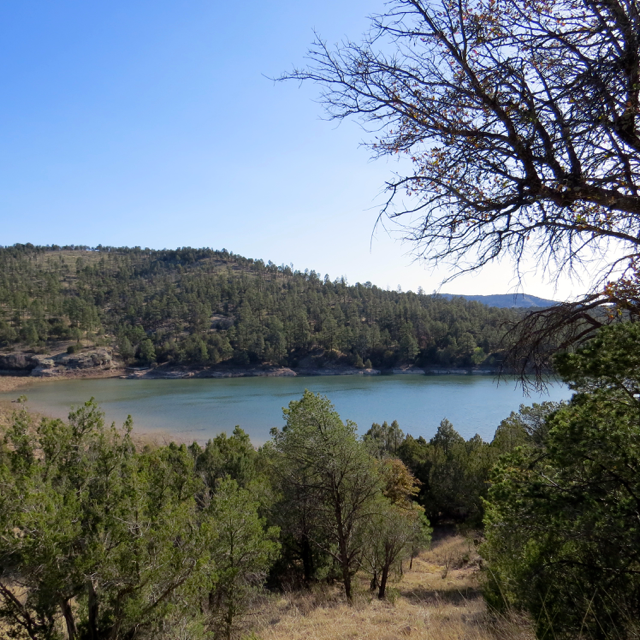
Lake Roberts
My first stop was the Gila Cliff Dwellings, in the southwestern part of the state. I found a great campsite on a little lake called Lake Roberts. I set up camp quickly because I still had my Arizona shorts and sleeveless shirt on and it was about 55 degrees. That night was really cold; I’m set up for cold weather, I have a heater (which I don’t run while I’m sleeping), a warm sleeping bag and plenty of extra blankets. The only time cold weather is really painful is in the morning when you get up to put the coffee on and realize there is a skim of ice in the dog’s water bowl! I have wakened to snow twice since I have been here! But spring is arriving to New Mexico and during the days when the sun shines it’s usually between 65 and 70, great hiking weather, so Maya and I have adjusted.
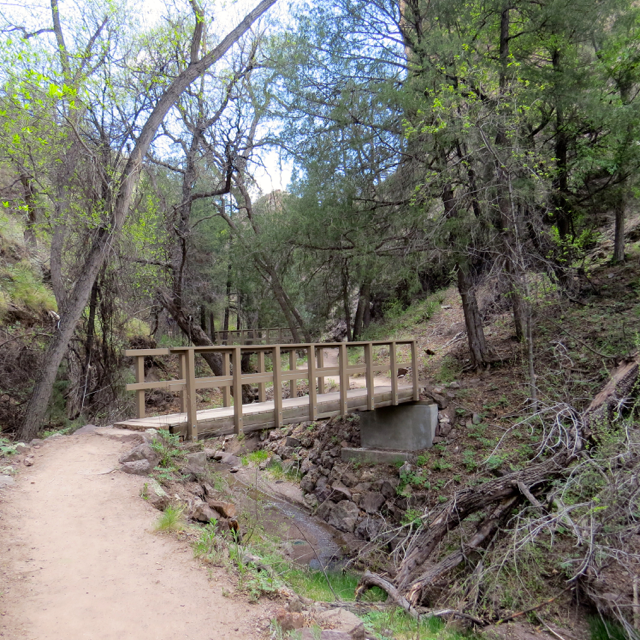
It was a pretty hike up to the cliff dwellings.
The Gila Cliff Dwellings are the second ancient homes I have visited. They were different from the ones I visited in Arizona that were built by the Salado people. For one thing there is water close at hand.When you hike up to the cliffs you pass through a lovely wooded area with a stream flowing through it.
These homes were built by the Mogollon people in about 1275. The dwellings themselves are much larger and more elaborate than the Arizona ones, they have many rooms. The builders also have borrowed some architectural elements from native people that lived farther north. It is believed that a great deal of trade went on between natives of Mexico, Arizona and New Mexico. Macaw feathers and shells from farther south were found. Evidence of Apache hunter-gathers were found in the area and the Mimbres people lived to the Southeast of the cliff dwellings. As I was touring one of the park rangers brought up a fascinating point about these dwellings, she said

This Window is an example of architecture used by natives farther north.
“It is often what archeologists don’t find that is also significant.” In this case, archeologists never found any burial sites in the area and believe this dwelling was abandoned after only one generation. No one knows why, it seems like a perfect spot. Yet in Arizona where the climate seemed harsher, people thrived for hundreds of years. I love history and like to ponder puzzles like this one that seem to have no answer we will ever discover. Did other tribes force them to leave or was it the climate that initiated the move?

This is the front porch of the dwelling.
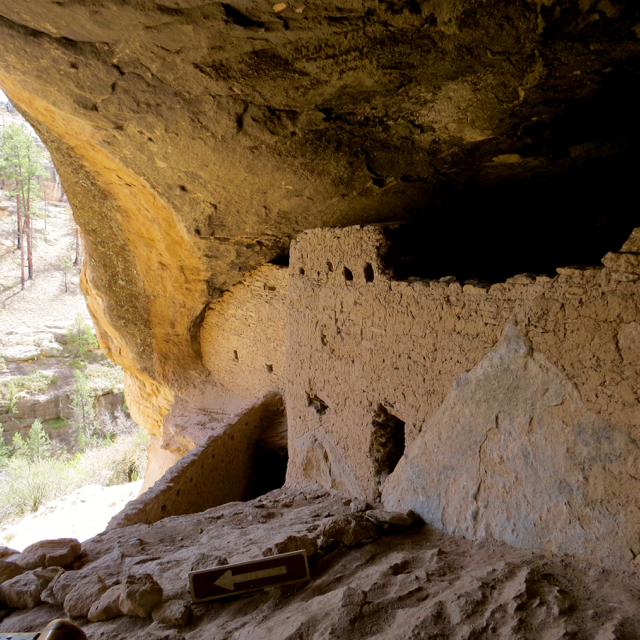
A shot of the interior.
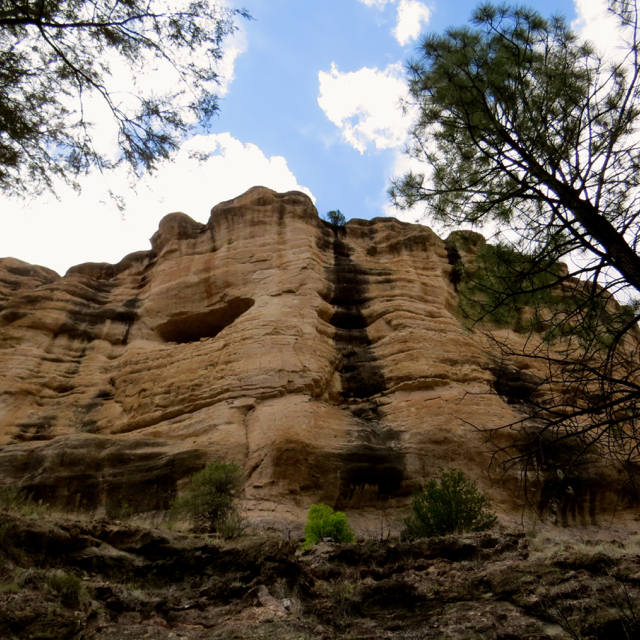
View from below.
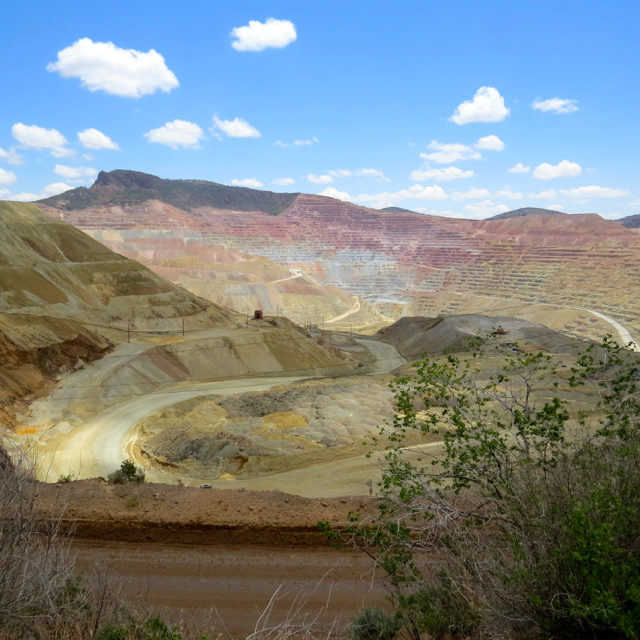
Santa Rita open pit mine.
Near by the Cliff Dwellings is a huge open-pit mine in Santa Rita, New Mexico. Native Americans had been using surface copper and turquoise from this area for jewelry. When Americans discovered the ore, mining began in earnest. The town of Santa Rita which grew up because of mining activities had to be moved when it was found it was sitting atop valuable ore. Today there stands an immense open-pit mine which is really quite beautiful with all the different colored soils and ore.

Datil Well campground where the elk and the antelope play.
My next stop in New Mexico was north of Gila National forest at the Datil Well Campground. This place was famous for being one of the wells that stockmen would water their herds at. Wells needed to be about ten miles apart, which was about how far a herd could travel in one day. In Magdalena the cattle and sheep would be loaded on trains to go East to the slaughterhouses. The country hasn’t changed much, it’s still open plains with herds of cattle and horses along with elk and pronghorn antelope grazing under a big sky.
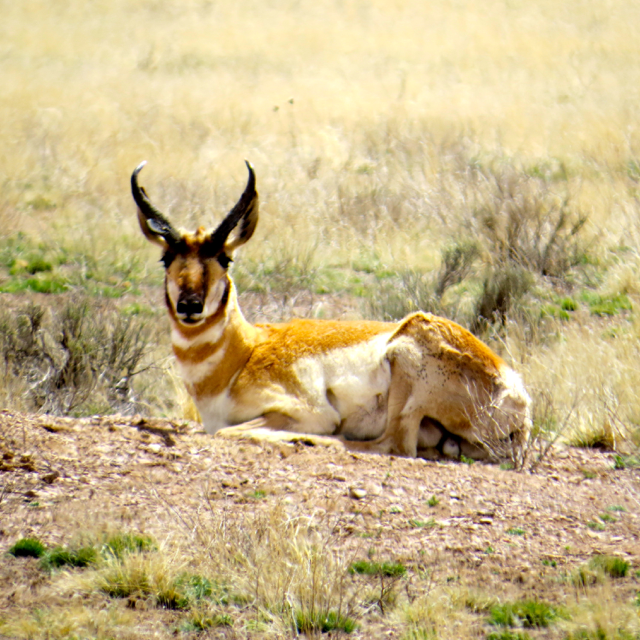
Pronghorn antelope
This place is named the Plains of St. Augustin. The plains themselves sit at an elevation of over 7,000 feet and are surrounded by mountains. At one time this was an enormous lake. Now it is the perfect spot for the VLA, or Very Large Array. The VLA is a radio telescope made up of 27 dish shaped receivers which can be moved into different arrangements, the largest being 22 miles long! The receivers work as one very large radio telescope. The facility has a fantastic visitor’s center and a self guided tour. I entered not even knowing that radio waves could be used to make images and left with a very basic knowledge of how this technology is used to study black holes and other galaxies. School children often visit this facility and I wish it wasn’t so remote so that more students could come and see science in action.
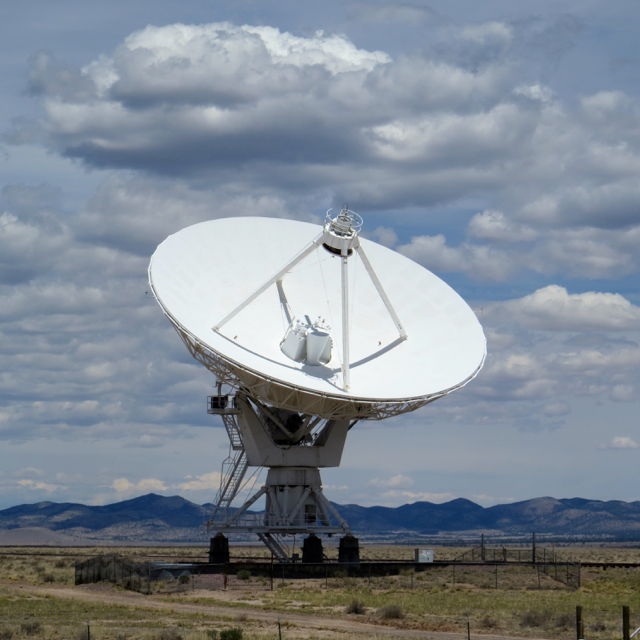
Just one of the radio dishes.
I traveled less than 150 miles in this part of New Mexico and experienced a culture from 1276, stock trails from 1800’s to the most advanced technology we have in 2015. Time traveling is sometimes weary business, but definitely worth it! I’m glad I’m discovering more of New Mexico.
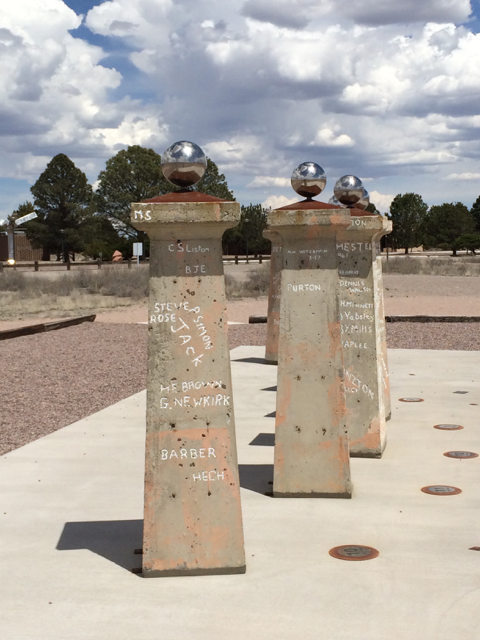
Famous scientist and Nobel Prize winners were invited to sign the posts of the sundial.

The visitors center also had a radio sundial.
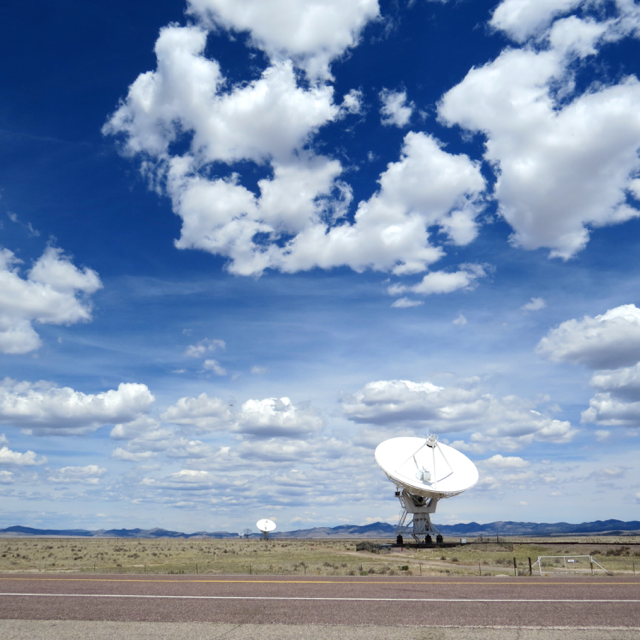
In this photo you can see how far apart the dishes are placed.

 Away!
Away! 
In paragraph 3, I believe you’re referring to “mines” which have “many rooms.” Not sure. Needs copy-editing. Also please correct misspellings of archaeology and San Agustin. – Mike
Thanks again for your editing expertise!
Terrific reporting and enticing photographs! Well done, as usual!
Thank you Anne!
Good photos of the pronghorn. Interesting material about ancient puebloans. From something, I’m reading, I believe the cliff dwellings were essentially like forts or castles, a defense against marauding groups.
Yes, that is what I’m learning too. A Zuni native also explained to me that being up high was great for hunting, some of the dwellings are located near box canyons where they could trap game. I had never thought of that.