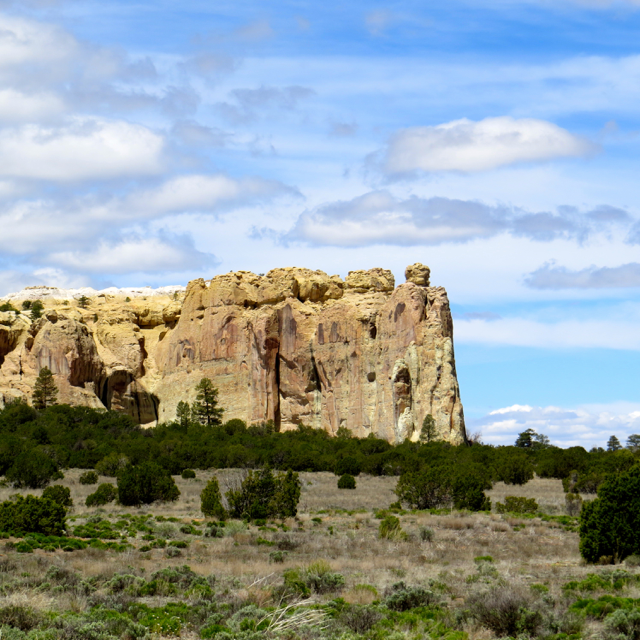
El Morrow National Monument
One of the most moving places I have visited thus far is El Morro National Monument in New Mexico. Here, under a towering sandstone bluff you will find a small pool of water, an oasis in the desert. Etched into the wall around the pool are carvings in the sandstone from Native Americans, Spanish Explorers, American Military and pioneers. For over a thousand years this was a vital stop to get water in the desert and as the travelers stopped they left their mark in order to simply say, I have passed this way.
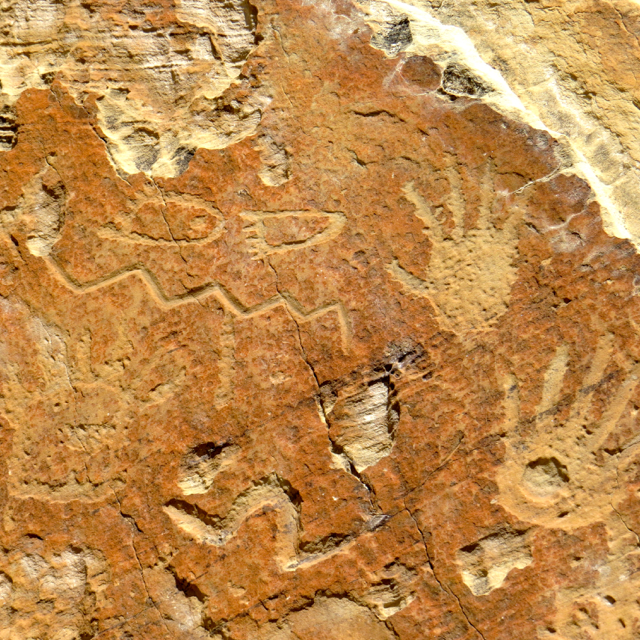
Examples of petroglyphs found in El Morro, I like the bear paws.
What makes this experience so special for the visitor today is that archaeologists have tracked down the stories of many of the people who signed their names. Spanish Conquistadors who brought priests and settlers into New Spain in hopes of gold and riches. After the land became American territory, many military brigades passed through on their way to Arizona and California, including the famous Camel Brigade the army experimented with in the 1850 to see if camels could cross the desert lands any better than the soldiers on horseback. Gilmer Breckinridge, a soldier in charge of 25 camels, signed his name as they passed through the area. One of my favorite inscriptions came from a young pioneer girl, Sara Fox.

Oasis at the base of the bluff.
Very few women signed the wall, but she did, showing something of her later spirit. After they left El Morro her wagon train was attacked, her stepfather killed and she was wounded by an arrow. Sara recovered and settled in California, living to be almost seventy years old. I would have loved to have talked to her about her experiences. Some of the information that I have found on her states that she became a teacher and was also an artist, working in oil paint. No wonder I feel such a connection with her.
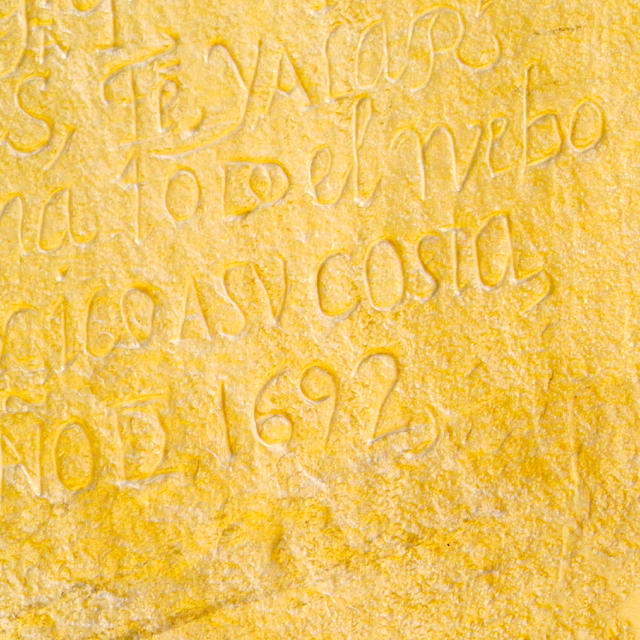
Spanish inscription from 1692
After one passes the pool and the inscription wall there is a trail that goes up to the top of El Morro. Looking up from the bottom I didn’t think I could make it. The high altitude has been making me short of breath, I have a bad back and knees and I’m afraid of heights! Curiosity got the better of me, there was an ancient ruin on the top and I really wanted to see it. Maya is always ready for an adventure so we tried and made it! The climb was not too bad and when you reached the top it was exhilarating. The scary part was that the trail continued along the bare rock on top of El Morrow for about another half mile. There was a box canyon in the center so there were drop offs on either side of the trail and it was quite windy. I kept thinking about all the different types of feet that passed on this very well worn trail.
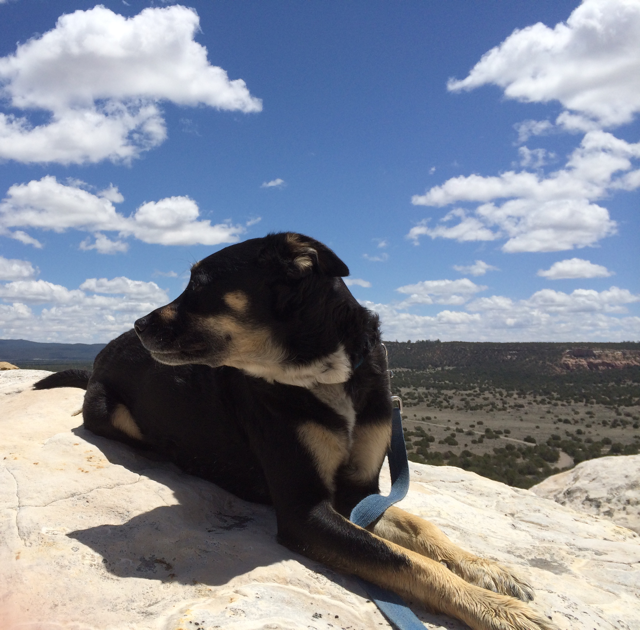
Maya taking in the view at the top of El Morro
Maya and I finally arrived at Atsinna – “place of writings on the rock” which is the name the Zuñi call the ancient village. It is not a cliff dwelling but sits on top of the mesa with an impressive view all around. I asked one of the rangers who is also a Zuñi if protection was the only reason for building there. He explained that protection was only part of the reason, the box canyon was a perfect way to not only spot large game animals but to also trap them. Once a herd of elk or mule deer entered the canyon, hunters were able to quickly close off the narrow entrance with brush in order to kill the animals easily. It is estimated that between thousand to fifteen hundred people lived in this village and that is a lot of mouths to feed in such an arid land so native people used the landscape to their advantage.
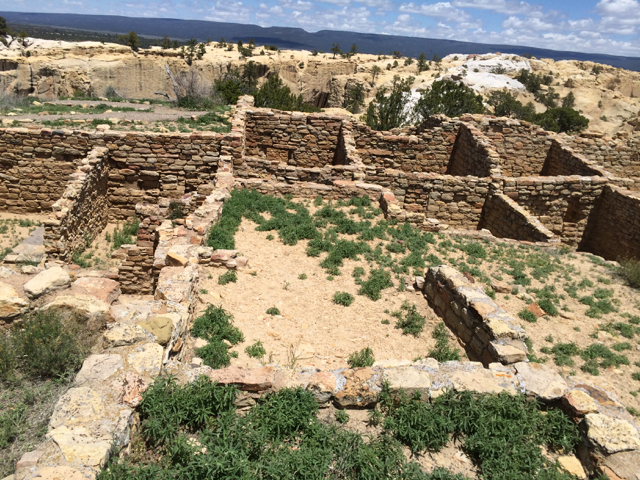
View of Atsinna at the top of El Morrow
Maya and I took some other interesting hikes in El Malpais National Monument which is about 40 miles away from El Morro. El Malpais means the bad country in Spanish and this is one of the areas of great volcanic activity in New Mexico. Lava fields spread out for miles and only stop when they approach huge sandstone cliffs. I was disappointed at first with the lava fields because they are covered with plants, I was expecting something like the fresh lava in Hawaii. But the area had many fascinating features so I wasn’t disappointed for long. One of the coolest things was the lava tubes which went on for miles and miles, they are hollow inside and form caves when they collapse. I visited one that had ice formations inside even in the summer.
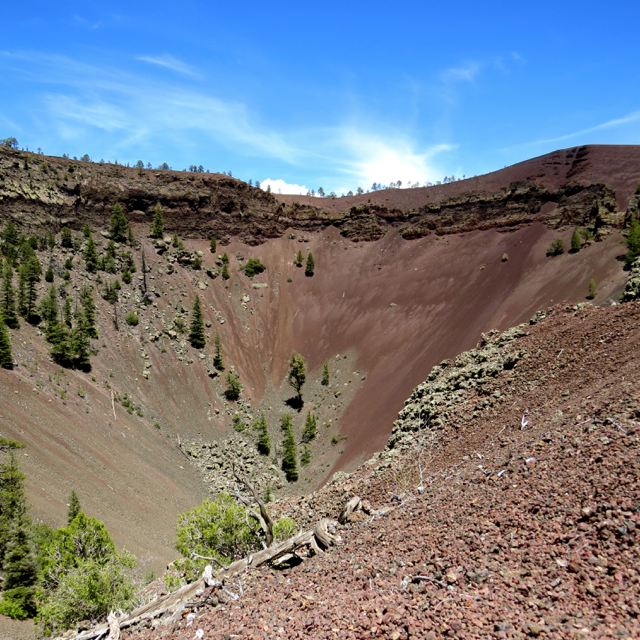
An extinct volcano cone, many can be found in this area.
It was on a private ranch and the owners have stories of the old days when they used a small one near the inn to keep the beer cold. This family has passed the land down through generations, someone was farsighted enough not to sell it to the national park because it was a unique tourist attraction. They have an interesting collection of artifacts they have gathered over the years, a hodgepodge of natural, Native American and old west objects. I was glad to be one of their “tourists”, the caves in the National Park were a several mile hike in and I don’t like hiking alone especially when you are in cougar country. There had been a sighting in the area the day before so I was a little spooked out.

Inside the lava tube
I loved New Mexico but was snowed on again the day before I left El Morro so instead of heading farther North as originally planned I headed southwest, back to Arizona to warm up and camp somewhere I have been wanting to camp since I first saw it 18 years ago. I tell you where it is next post.


 Away!
Away! 
At link above, a real fun poem about defenestration
Rotten trick to play on someone! Thanks for sharing.
Actually known to historians as The Defenestration Of Prague – it’s a thing! – because this occurrence started an historic war affecting many Europeans.
A fine travelogue (or, these days, travel blog) both in narration and photos. Loved the big photo gallery bonus at the end. Loved the stuff about lava tubes. Who knew? Loved the lore about the ancient people.
If I were alive back then, I fancy I’d be known as He Who Scratches On Walls. (Or, maybe more likely, Evil One We Threw Off Cliff.) I’d also leave scratched-in messages correcting the grammar of other scratchings, until such time as I was hurled into the canyon.
At the risk of being defenestrated (heave-ho’d off a high elevation): You misspelled El Morro several times, the “siting” you referred to is a sighting, and when you referred to conquistadors bringing in priests and settlers in search of gold, well, you have too much going on there: Just “settlers in search of gold” would be less jumbled. The priests were not mainly about gold, but about Spanish religious tradition, of course. – Mike
Thank you for your editing expertise! I will not defenestrate you today!