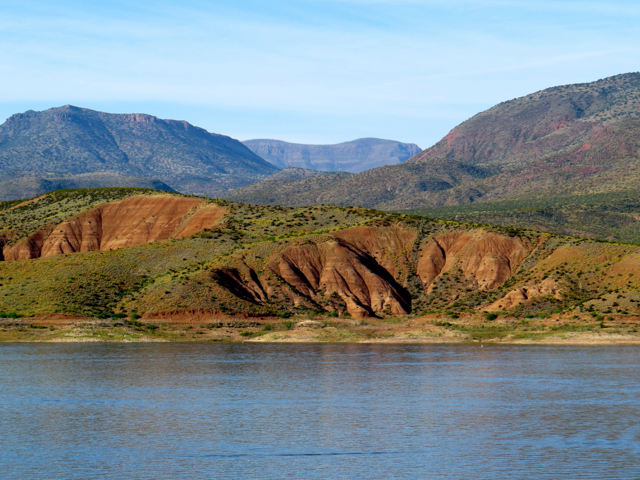
A fellow blogger recommended Theodore Roosevelt lake to me. I was looking for relief from the 90 degree weather, a place to kayak and a campsite where Maya could enjoy swimming. In truth, 90 degrees was fine for me but my black, heat absorbing dog was miserable. I had actually thought of making her a white cape and hood that she could wear on our walks – Maya of Arabia! No need for that though once we found this oasis.
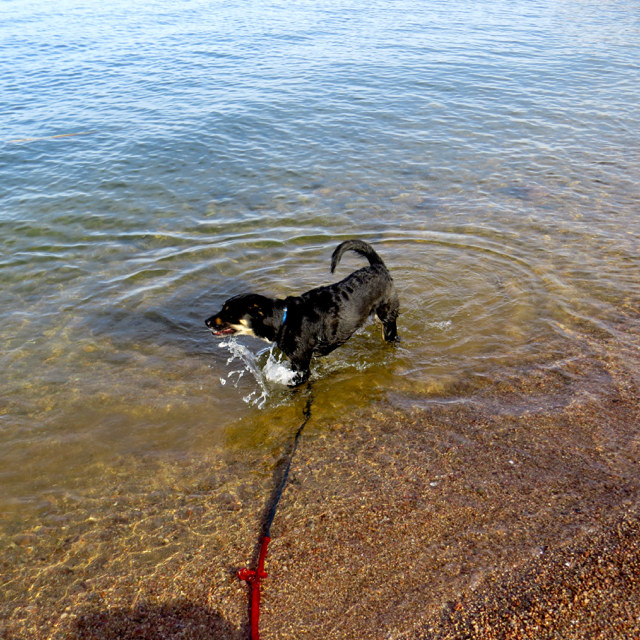
Maya is in Heaven!
Our first campsite was called Cholla, and it was an amazing bargain. For three dollars a night you had a campsite with a table under a shelter, fire pit, dumpster, dump station, flush toilets and solar showers. Did I mention the campground was absolutely beautiful? It was located on a cliff overlooking the lake, surrounded by mountains. Everything was in bloom and there were many types of birds to be found including a pesky Gila Woodpecker who insisted on drilling the tin roof of the picnic shelter at dawn every morning!
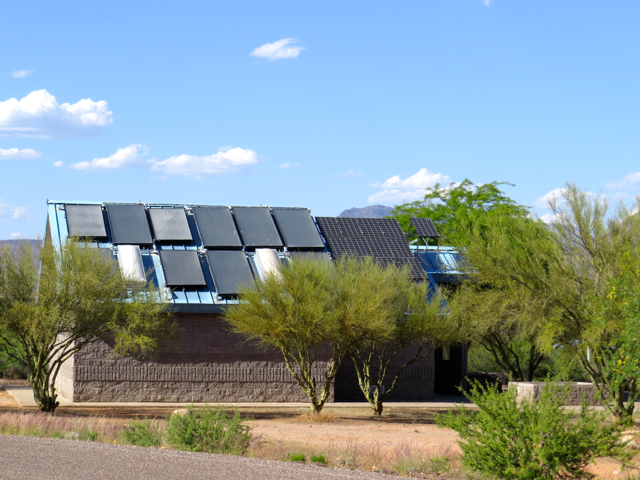
These solar showers were wonderful, i would like to see more National parks invest in these.
There was a trail down to a small beach where I would take Maya swimming. Two Ravens had built a nest and one day I photographed the pair grooming each other in what looked like a mating ritual. On the other side of the peninsula from where the beach was, there was a dead javelina in the water that had attracted dozens of vultures. It was interesting to see them circle and land on this dead tree by the water and sit all hunched up in their peculiar vulture stance. They did their job and the javelina was soon picked clean.
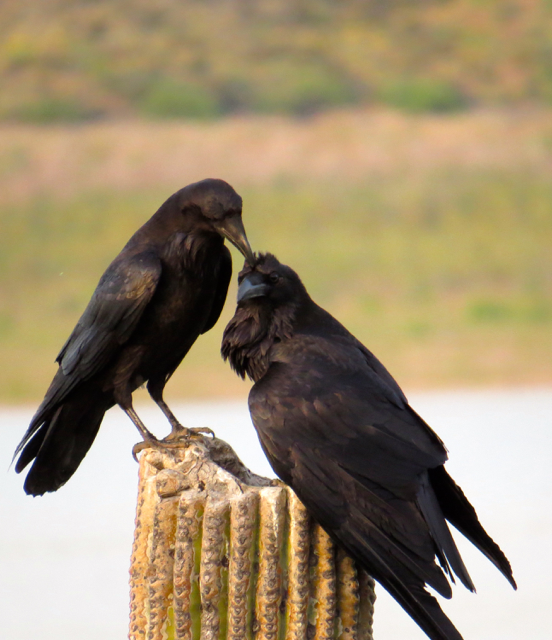
Raven love.

This Curved Bill Thrasher can’t stand all the mush.
I made a new friend named Debbie and her little dog Sandy. She helped me catch Maya one day when Maya escaped. Maya is the perfect travel dog with one small flaw, if she gets off her lead she will run around for literally hours with poor me trying to catch her. It’s such a fun game for her and sometimes we get to meet new people like Debbie. I admire Debbie a great deal; she lost her husband a few years ago and has been diagnosed with Lupus and Crohn’s disease. Debbie has a bucket list of things she wants to see and do so she is traveling with her dog Sandy in a class C camper. Although she often doesn’t feel good, she loves to laugh and have a good time, and is trying not to let her physical problems get in her way. We had a great week together and hope to meet up again in Utah.

Debbie and Sandy
Debbie and I decided to move camp to another site on Roosevelt lake called Bermuda Flats. This campsite was right on the beach with no designated campsites, you found an open spot and set up camp. It was more convenient for kayaking – my back has been bothering me so getting the boat up and down off the car is a chore. At this site I unloaded it and was ready to go for a paddle any time I wanted. Maya also loved this spot because she could play in the water; which she did non-stop the whole time we were there.

Dam that made the lake.
From looking at maps I realized Roosevelt lake is an artificial lake that was made when they put a dam up on the Salt River. One day we went to see the dam and traveled the Apache Trail which was a windy dirt road that runs through the mountains along the salt river. Indeed it was a true path that the Apache used to travel and was utilized by the builders of the dam to bring materials in from Phoenix. Tonto basin, where the Salt River flowed was home to several groups of native people as well as white farmers who came later to the valley. The problem was that every few years the river would flood, wiping out all of the crops and farmland. In order to tame the river the government decided to build a dam and created Roosevelt lake.
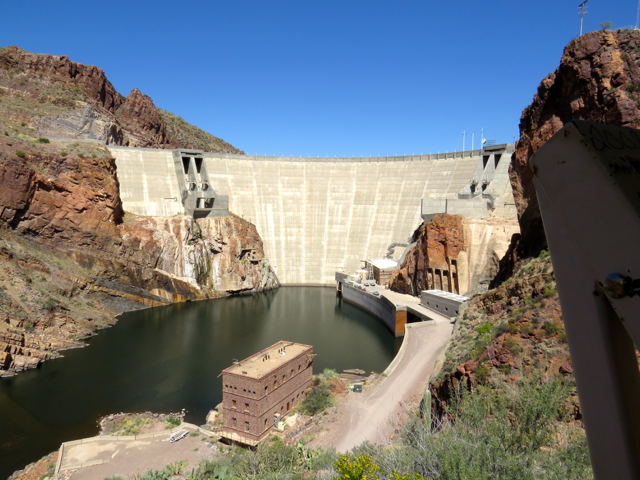
Back side of the dam.
What I didn’t know about this area is that there are many cliff dwellings scattered among the mountains. They were discovered in 1906 when work began on the dam. The Salado people (named by white man after the river, Salado is salt in Spanish) grew their crops in the valley and you could see outlines of irrigation ditches before they flooded the valley. The cliff dwellings are miles from what would have been farmland so it is uncertain whether they also had some type of home or shelter near the fields. They also would have had to carry water very far, I saw no spring or water near the dwellings. I asked a Ranger and they said there was a spring on the other side of the mountain opposite the dwellings. My estimate; two miles one way – up and down a mountain!
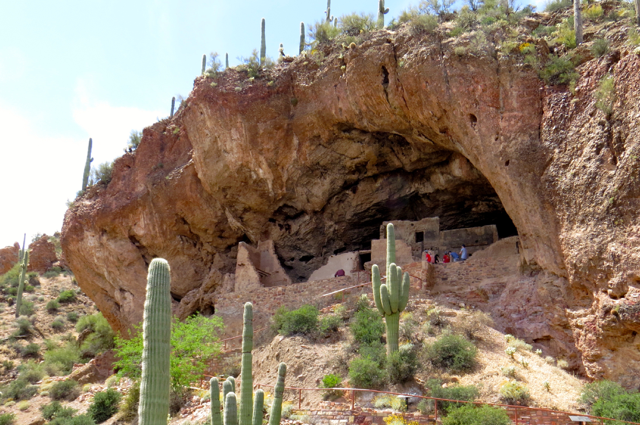
Cliff dwellings of the Salado People.
It was a special experience to be able to walk up to these dwellings and visit them. I loved the way the opening was to the south to let the light in and how integrated the structures were with the surrounding landscape. It was a very hot day and yet it was cool inside. One could sit quietly in the shade and ponder about the lives of the builders of these dwellings. Something that I hadn’t thought about before is that the climate of the desert preserves artifacts much better than in other parts of our country. We are very fortunate to have these places to study, in my opinion it gives us a richer and deeper view of what America truly is.

Partial wall and beams from the dwellings.
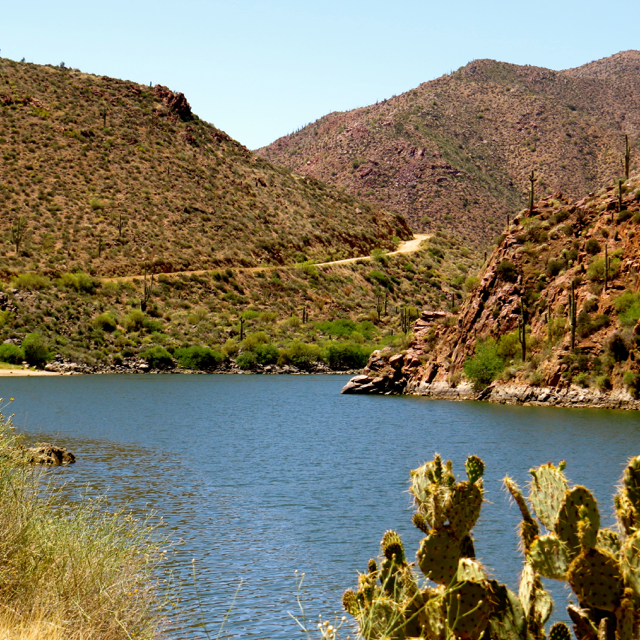
The Salt River with the Apache trail winding above it.
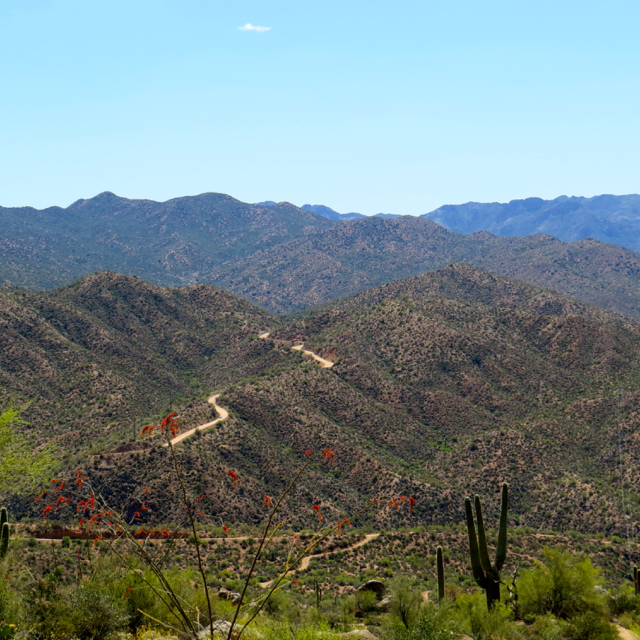
Another view of the Apache Trail.

I’m happy kayaking, people kept asking why I had a kayak in the desert.
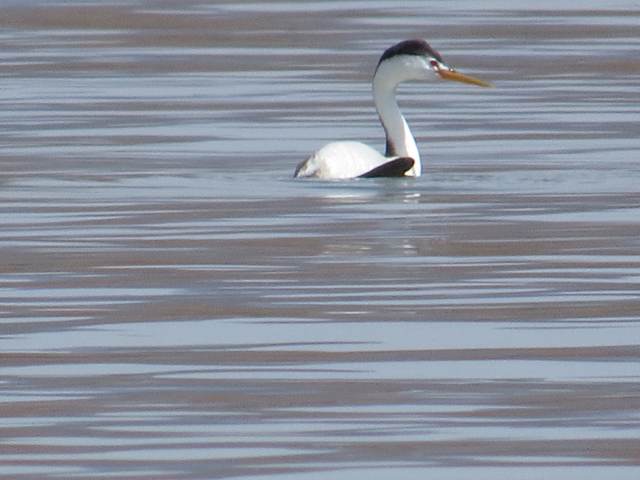
A Clarke’s grebe on the lake.

It’s too early for Saguaro Cactus to bloom!
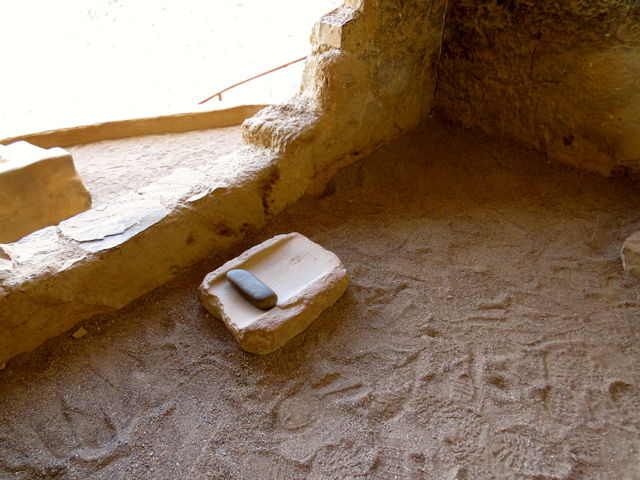
Grinding stone found in the dwell
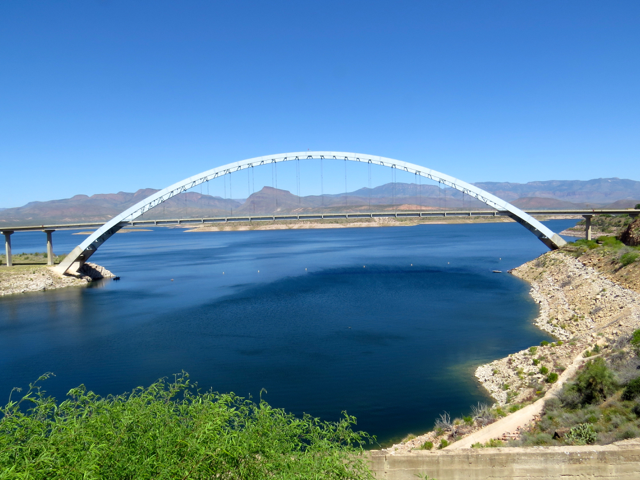
Suspension bridge by the dam.

 Away!
Away! 
Pam you look so happy in your kayak. It’s a great pic!
Thanks Anna, I was, it is a beautiful place!
No editorial suggestions?
Meant to say … “solved a big problem in a big dam way.” (There’s no edit mode for commenters.)
Fantastic reporting, Pam!
Thanks Anne!
Well, when the civil engineers built that lake they solved a big dam problem.